Showing posts with label Elections. Show all posts

Wednesday, August 07, 2013

Kurds choose November date for local elections

This comes in today from the UN:

In a letter addressed to the IHEC (Iraq High Electoral Commission) Chairman, the KRG (Kurdish Regional Government) Prime Minister officially informed IHEC of the decision to hold the region’s governorate council elections on 21 November 2013. The decision confirms IHEC’s suggestion on the election schedule as contained in its 17 July letter to the region’s authorities. The region’s Parliamentary elections remain as scheduled on 21 September 2013.

The vetting process for candidates for the Kurdistan Region’s parliamentary elections has been completed. The number of candidates now stands at 1133, of which 367 or more than 32% are women candidates. The political campaign period has started albeit in a muted tone with no major public campaign activity held so far in the region.

AND with regard to controversial proposals to amend the national elections law:

UNAMI continues to monitor developments in the Iraqi Council of Representatives on proposals to amend the electoral law for the 2014 Iraq parliamentary elections. The most contentious point remains to be the seat allocation formula – with political blocs diverging on their views regarding the D’Hondt, St. Lague or modified St. Lague formula.

Tuesday, June 25, 2013

Iraq's elections

The following is an edited version of the latest UN report on Iraq's elections:

 On 20 June, governorate council elections took place in Anbar and Ninewa. Voter turnout reached 50% in Anbar and 38% in Ninewa, with figures likely to increase further once special voting data is incorporated.

 On 19 June, the Kurdistan Regional Parliament passed amendments adopting the semi-open list voting for the region’s parliamentary elections and removing the provision on both the parliamentary electoral law and the governorate council electoral law requiring that each component candidate be elected by voters from the same component.

 On 23 June, the Legal Committee of the Council of Representatives also forwarded to the Presidency the proposed law for holding the governorate council elections in Kirkuk.

For further information please consult IHEC and UNAMI websites: www.ihec.iq  www.unami.unmissions.org

Wednesday, September 08, 2010

Prime Minister in a Fortnight

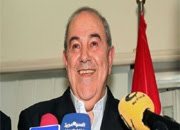
NCF sources indicate that we will have the endorsement of Malaki as premier within the fortnight but that decisions on Ministerial posts will take some months yet. Some interesting comments from Allawi (pictured):

Allawi sees progress on govt by end of October

Gulf Times - 07 September, 2010
Former Iraqi premier Iyad Allawi hopes coalition talks will have progressed by end-October and said forming a government was key to security in Iraq after the US formally ended combat operations.

>>>>>>>>>>>>>>>

Thursday, August 05, 2010

The UN at it again

The United Nations is interfering in Iraq yet again. When will they learn to shut up. Iraq has a long history of UN created pain. Now the UN is trying to dictate the agenda on government formation, following, as almost always, the American lead. It is impossible to expect a final new government in Iraq before Eid. Especially with the USA being so keen on a government of national unity including Allawi. Best current bet is Allawi Foreign Minister and Malaki PM with Kurdish support and Hakim and the Sadderists as opposition. It is difficult for the Sadderists to accept Malaki as premier which is why an all shiite governing coalition is now unlikely.

UN urges Iraq to quickly form new government - Arab News - 05 August, 2010:
The UN Security Council is strongly urging Iraqi politicians to quickly agree on a new government, a call backed by the top United Nations envoy who warns that the country has reached "a critical juncture."

Monday, May 17, 2010

Notes from a KRG friend

My understanding / thoughts re Baghdad:
Allawi has attracted considerable Sunni vote.
The issue that Malaki is somehow representative of "security" is something Al Hakim could build on but it is scare stuff because Allawi is known as a tough man who, given the chance, will drive the country less to the geographical right.
The thinking/middle class intelligent vote will become an increasingly important tool in shaping future Iraqi (democratically elected) governments.
Iraqis are revelling in democracy and free speech but unless democracy produces a strong leader who will steer Iraq to either economic prosperity or towards a secular society this is a false dawn. Paradoxically, the strong leader is likely to unravel some of the democracy which he will have manipulated to give foundations to his soap box (but that's an issue for later).

Regionally (ex Baghdad):
KRG area: Gorran (change movement) has sniped very successfully at the PUK and has won the young vote. It is also frightening the KDP because whilst the KDP's position in Sulaymaniyah is gaining ground, it is against the PUK and not against Gorran. On the street it seems that components of the KDP are behaving just like the worst money grabbing elements of the PUK have been in the last 3 years. If the result is the same as in the PUK area we are going to see a backlash against the KDP which only tough feudal government will sort out. Nechirvan Barzani is already being touted as coming back to the front line as opposed to steering from the back seat. There's a street-like hate of the KRG top powerbase from many Kurdish people who are distraught that the society-comes-first attitude of Mulla Mustafa Barzani is being squandered by abject greed from the current generations in power. The Turkish military is amassing forces at the border (literally, this week): expect their stealthy takeover to continue apace.
Kirkuk and the Northern Governorates south of the Green Line: some accommodation will need to be made by the new government as there is a void in the region. I know of at least one internationally-advised legal challenge to Baghdad from Governorates (Diyala or Salah al Din, I cannot remember which) to request for international projects. The inference here is that there has been a significant element of favouritism in the award of oil projects and unless the GOI system more fairly distributes projects geographically there will be trouble on the streets.
Basra and the Southern Governorates: again, some Governorates are devoid of any international pot of gold. They are angry. Otherwise there persists a massive infrastructure vacuum in the South, even though the first signs of an entirely international-led infrastructure investment is happening. The South (and therefore Baghdad) needs to fathom out how to permit simpler foreign direct investment because it provides the causal link to provide work for Iraqi men who otherwise will become a social and physical security nightmare. The South is deeply troubled because there is highly likely to be fighting whomever wins.

Conclusion:
Common sense winner: Allawi, hands down the best person to keep all Iraq in some sort of steady independent state in a true democracy, force the thrust to economic independence with concurrent infrastructure improvements, and who has the competences to be Iraq's next benign dictator should that be a better route forward than weakness emanating from a coalition. He is also a much better man to deal with Erdogan.
That means.... probably someone else will scoop the pot.

Monday, May 03, 2010

Iraq locked in two-man power struggle after vote

Two months after a general election that produced no outright winner, Iraq has become locked in a battle between two men fighting for power that threatens its fragile security and hopes for stability.... A great democracy is born ! ! !

Thursday, April 29, 2010

Allawi says new polls may be needed

The mess in post election Iraq continues:

Agence France-Presse - 29 April, 2010
Iraq’s general election winner Iyad Allawi on Wednesday said new parliamentary polls run by international monitors might be needed to end concerted efforts from rivals who want to reverse his victory.A statement from Allawi’s Iraqiya coalition said it had considered asking the United Nations, the European Union, and the Arab League to intervene amid bitter recriminations that have blocked the democratic progress since the March 7 vote. Allawi says his rivals are trying to change the result, through a Baghdad recount and also by the intervention of a controversial committee that disqualified dozens of his candidates after the election. The former premier was in Egypt on Wednesday, where he met President Hosni Mubarak in Sharm el-Sheikh and later Arab League chief Amr Mussa in the pan-Arab organisation’s Cairo headquarters. Allawi told reporters after the Cairo meeting that he asked the Arab League to intervene with the UN to end his country’s stalemate. He said he did not have detailed talks with Mubarak, who performed an open surgery last month. “We asked the Arab League to intervene with the UN to help Iraq get past this trial,” he said. “We hope for a legal implementation of the elections,” without elaborating. Iraqiya’s strong backing in Sunni Arab areas allowed Allawi, a Shiite, to defeat incumbent Prime Minister Nuri al-Maliki, also Shiite, 91 seats to 89, according to unofficial results. Both need 163 seats to form a majority government but coalition talks with smaller parties appear to have stalled, leaving the country far from ready to seat a new government. The Baghdad recount, which has yet to get under way, followed an appeal by Maliki on the grounds that electoral violations cost him votes. Iraqiya leaders said they would send a letter to the head of Iraq’s top court, the Supreme Judicial Council, “stressing the urgency of his intervention to protect the judiciary from political influence, as this may have serious ramifications on the stability of the country”. At the centre of the dispute is the Justice and Accountability committee (JAC), chaired by former deputy prime minister Ahmed Chalabi, who won a seat in last month’s election and is a leading member of a rival coalition. “We have fears that this committee is trying to obstruct the formation of the next parliament, through continuing its random eradication policy, without proof and without taking people to court,” Allawi told Sharqiya television. The same committee’s executive chairman is Ali al-Lami, a Chalabi ally who failed to win a seat. “It works without legal and constitutional cover, and this is not allowable in Iraq or any country that respects the independence of judicial authorities,” Allawi added. Iraqiya said it had “examined the option of resorting to the international community”, including the members of the (UN) Security Council, EU, and states of the Arab League “to exercise their moral and legal right over the protection of the political process from any injustices and to form a caretaker government and repeat the elections in an environment free of any political manipulation”. Such intervention would be feasible as Iraq remains under the reach of Chapter Seven of the UN charter, which sets out the Security Council’s powers to maintain peace. Iraq was put into Chapter Seven status after now executed dictator Saddam Hussein invaded Kuwait in 1990. An election official late Tuesday said a ruling on whether a further nine election-winning candidates would be disqualified had been postponed until next week, in another hold-up. The candidates are variously accused of links to Saddam’s outlawed Baath party and military units during his reign. US Secretary of State Hillary Clinton on Tuesday urged Iraqi leaders to resolve their rows and form a new government quickly. The lack of a government almost seven weeks after the election has alarmed Washington, which plans to withdraw all combat troops from Iraq by August, ahead of a complete US military pullout at the end of 2011.

Saturday, April 03, 2010

Allawi gets his chance

Allawi is now almost certain to be the next Iraqi Premier. INA Boss Ammr Al Hakim has stated that he will support the guy. So it's all change in Iraq.

Tuesday, March 23, 2010

Malaki Wins by one seat!

The announcement of the final results of the Iraq elections by the IHEC is scheduled for Friday 26th March. The IHEC web team is working on gradually uploading the results on the three pages on its website: www.ihec.iq .

Our analysis of those results (by NCF Senior Fellow Justin Alexander) gives a final predicted result of a Dawa win with 90 seats to Dawa and 89 to Allawi. Justin still forecasts that Allawi will win slightly more of the popular vote, and he could still just about pick up an extra seat in Baghdad or Salahadin to draw level. However, as it stands SLA will lead by one seat (although others put them exactly level). This will be a photo-finish.

We're nearing the end of the count!

Saturday, March 06, 2010

ELECTIONS

Well here we are in Baghdad. We are preparing to monitor tomorrow's elections having covered much of the country. There are all sorts of threats including the classic diatribe from the Al Qaida style groups who threaten dire consequences should Iraqis vote. But they will. In their millions. Everyone is eager to vote even at the risk of their lives. And, with results to be posted on every polling station there is far less opportunity for large scale fraud than in the past. Thank God. Say a prayer for us though. We have survived tough old Kirkukthis time. And these trips are a regular feature of our lives these days - but none the less I am bothered by the foreign financed bombers that keep trying to disrupt democracy in Iraq at this critical time.

Sunday, February 14, 2010

Candidate Ban confirmed

Things are getting bad for the elections. It doesn't bode well for a peaceful process. Very very worrying. This candidate ban on quasi-Baathists could have severe consequences in terms of electoral violence >>>>>>>>>>>>>>>>>>>

Thursday, January 14, 2010

Ba'ath saga haunts Iraq's future

Ranj sends his article in about the attempted banning of key Sunni politicians because of that offensive US promoted debaathification law. One sure fire way to undermine democracy:

The Iraqi government is treading a fine line after its Accountability and Justice commission (also known as the "de-Ba'athification" commission) moved to bar a prominent Sunni politician, Salah al-Mutlaq, and 14 others from contesting the national elections in March because of their ties with the outlawed Ba'ath party. >>>>>>>>>>>>

Tuesday, December 15, 2009

Iraq elections - Really March 7th?

An NCF member with his finger on the pulse writes: It's still possible the elections could get delayed again past 7 March, although the Americans will be lobbying heavily against it. The Presidency Council (who's parties are likely to loose ground to non-sectarians) may attempt a constitutional coup against Maliki post-Jan 31st.

Iraq's three man Presidency Council are:
  1. Jalal Talabani (the Kurdish President) whose PUK political party is on shaky ground since its poor showing at the Kurdistan parliamentary elections back in the summer of this year (in part because of allegations of corruption).
  2. Tariq al Hashemi (the Sunni Vice President). Ostensibly Al-Hashemi obtained all the concessions he wanted in the bargaining over the elections: a greater political voice for minority Sunnis, equal voting rights for Iraqis living abroad (mostly Sunnis), and a more advantageous distribution of seats in Iraq's expanded 325-seat parliament (15 seats are set aside for religious and ethnic minorities traditionally allied to the Sunnis such as Christians and Turkomen).
  3. Adel Abdul-Mahdi (the Shiite Vice President). Adel would be the preferred nominee for Premier of the Supreme Islamic Council of Iraq (ISCI) should that Hakim led party have preeminence.
Note that none of the above have any real enduring fondness for Maliki who is trying to model himself as a secular leader whilst retaining his Islamist core vote.

Wednesday, November 18, 2009

More trouble for Iraq's elections

Iraq's Kurdish region is trying to mess up the elections. They don't want to face the fact that the established parties (PUK/KDP) are likely to do less well than before. So they use a credible delaying tactic for less than credible reasons - complaining about their allocation of seats. Stafford writes:

The updated table below corrects the total number of seats which is based on one seat per 100,000 population for a highly questionable total population of 32,300,000.

Given obvious migrations into the Kurdistan Region since 2003 by returnees and those fleeing violence from other parts of the country since 2005, it is difficult to accept that such population increases are not reflected in a higher number of seats. Governorate (provincial) population increases in the total (unrealistic) figure of 32.3 million are questionably allocated largely among governorates outside the Region.

The last official figures with some semblance of official international certification were governorate figures listed in the December 2002 Distribution Plan for the UN-managed oil-for-food program. For certain parts of the country, however, these figure were estimated to have been inflated by as much as 3 million.

To view the Iraq Parliament Seat Allocations Click here

Tuesday, November 17, 2009

Talabani tries to undermine elections

Iraqi President Jalal Talabani is still smarting from the drubbing he got at the ballot box in the recent elections in Kurdistan and he can't face another humiliation. So he is trying to stop the January elections for the national parliament. The way he has chosen to do it is to undermine things by refusing to sign any election law unless parliament increases minority representation. Of itself a good idea were his motives less impure.

Agence France-Presse - 17 November, 2009
Iraq's general election in January was thrown into doubt on Monday when the war-torn country’s presidential council demanded a greater say for minorities and nationals living abroad.

President Jalal Talabani told AFP he wants parliament to change the electoral law governing the vote so that the number of seats set aside for minorities, including Christians, and Iraqi expatriates will be tripled.

Friday, October 23, 2009

Elections dispute

The New York Times writes: The dispute over the election law centers first on the question of whether voters can cast their ballots for parties or individuals. Voting for individuals is preferable because it offers a more direct connection between politicians and their constituents and helps weaken ethnically based parties.

Staffod Clarry responds: Yes, but no individual is likely to be effective without group support. The corollary: individuals can be made ineffective by groups. Iraq is not there yet.

Iraq is a country deeply divided into groups and by groups (ethnic groups, sectarians groups, clans, tribes). In groups there is power to be constructive, or destructive. In individuals, without group support, there is limited opportunity to be constructive, or destructive.

The New York Times writes: The second, even more difficult issue, is who should be eligible to vote in Kirkuk. Mr. Hussein drove Kurds out of the region; Arabs now charge that the Kurdish regional government is flooding the city with Kurds to bolster its territorial claims.

Stafford Clarry writes: It is indeed rather amazing that this persistent specious argument has not yet been put to sleep. Facts say something else. Which residents have ancestral ties to the area whose families were forced to migrate? The corollary: which residents of Kirkuk have ancestral ties to some place else, but came to Kirkuk after others were forced to migrate in order to occupy their properties?

Thursday, October 22, 2009

Elections Trouble

So the Iraq electoral law has not been passed yet. What a nuisance. If they use the old law with its "party list" system which means people can't vote for individuals - it will be a shame.

The hold up is - of course - Kirkuk. Blame the British for kicking that can down the road. British diplomats campaigned hard to stop a resolutrion of the Kirkuk issue in the early days when they said it was explosive. Leave a wound and it festers. And now it's truly explosive. Stupid bloody Brits.